


12 January 2026
CO26005 | Why the Najib Factor Continues to Represent a Gaping Wound for the Malaysian Polity

SYNOPSIS
The Najib factor continues to cut deeply into Malaysia’s politics and governance in the absence of political will to curb systemic corruption.
COMMENTARY
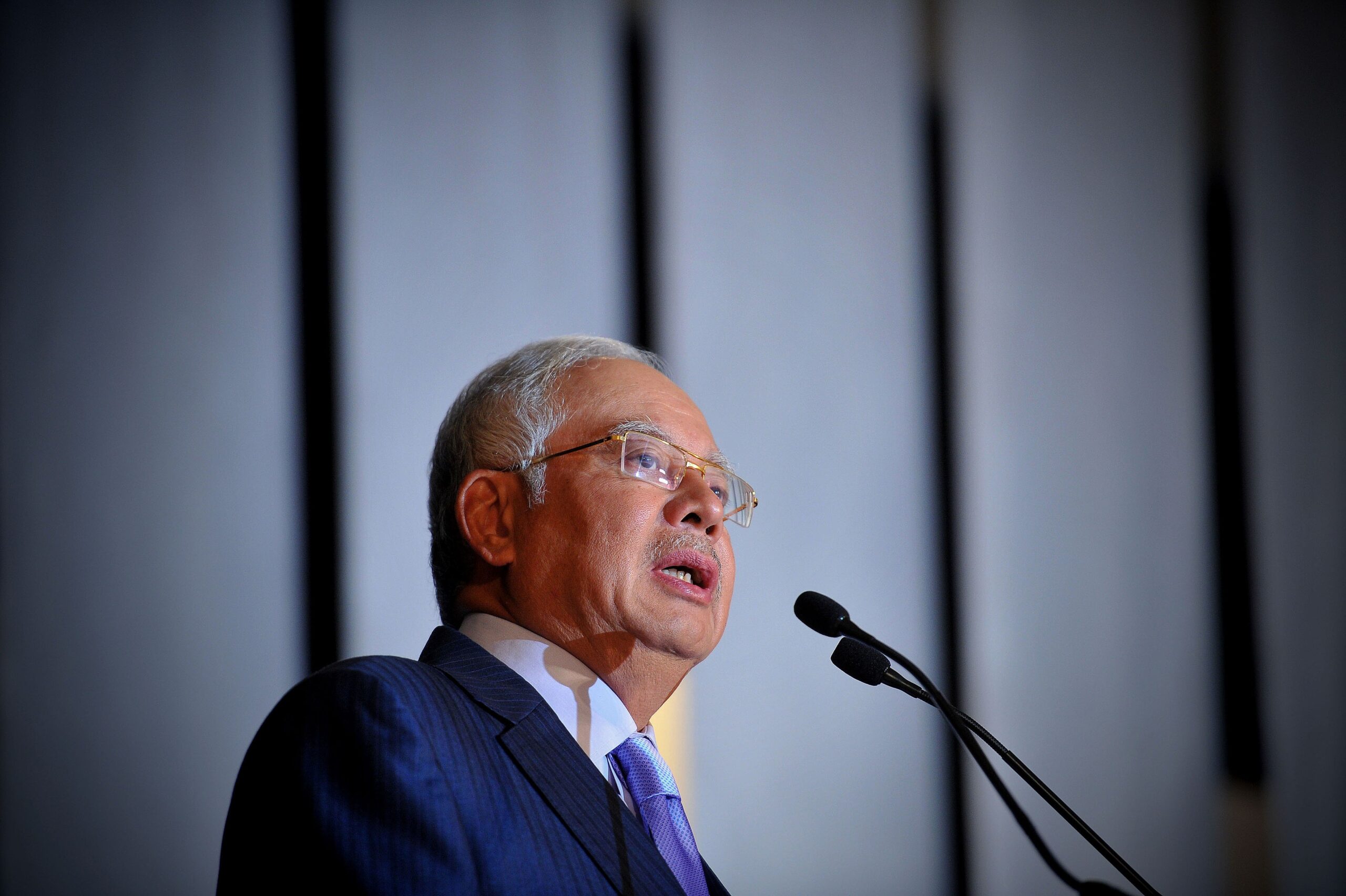
On 22 December, the Malaysian High Court blocked former Prime Minister Najib Razak’s bid to be placed under house arrest for the remainder of his ongoing six-year jail term for misappropriating RM 42 million in SRC International funds. On 26 December, concluding a six-year trial in the main multi-billion-ringgit 1MDB scandal case, the High Court found him guilty of four counts of abuse of power and 21 counts of money laundering. It sentenced him to 15 years in prison, imposed RM 13.5 billion (SGD 4.3) billion in fines and recovered assets.
Despite this one-two punch, Najib is not about to leave the ring.
Following angry calls by Najib supporters for the United Malays National Organisation (UMNO) to leave Prime Minister Anwar Ibrahim’s unity government and ally with opposition Parti Islam Se-Malaysia (PAS), UMNO President Zahid Hamidi had to state firmly on 6 January that UMNO would support the government until the next general election. This is unlikely to quell disquiet over UMNO’s position on Najib and, relatedly, its cooperation with Anwar’s Pakatan Harapan coalition, particularly at the upcoming UMNO General Assembly this week.
Multiple Court Cases
Najib has appealed both rulings. He is also facing civil suits by 1MDB and its former subsidiary SRC International. There are calls to reopen related graft cases for which he had been granted a discharge not amounting to acquittal (DNAA) during the current Anwar administration.
His lawyer has said that he could seek a fresh pardon from the current Malaysian King, Sultan Ibrahim Iskandar, for his first conviction. Given Najib’s legal setbacks and their serious financial implications, royal pardons may increasingly be the most viable route.
Public Perceptions
Malaysians do not follow these drawn-out court proceedings closely, but they pay keen attention to the major court rulings. There is pride in a judiciary that has repeatedly convicted a former prime minister.
Indeed, the public’s support for judicial independence from political interference has intensified with its deepening cynicism towards the entire political class. Rumours of a politically motivated appointment to the Chief Justice position led to a protest march by the Bar Council in July 2025. Public disquiet only dissipated after a different judge was appointed.
For those who believe in Najib’s guilt, his position as prime minister and finance minister had allowed him to abuse power and channel billions to himself and his affiliates with impunity. It was only with the combined efforts of the then opposition reformist parties and the electorate that he was toppled from power in the 2018 General Election, and then charged by the succeeding Pakatan Harapan administration led by Prime Minister Mahathir Mohamad.
The Anwar Administration, in contrast, is seen as having taken a less aggressive approach towards political allies. UMNO’s support had been critical for Anwar to form his unity government in 2022. Since then, Najib, his wife and UMNO leaders have been granted DNAAs or had graft charges dropped. Senior Sabah leaders from the Gabungan Rakyat Sabah (GRS), part of the unity government, alleged to be involved in a mining license corruption scandal, have not been charged.
In recent weeks, Anwar has reiterated his commitment to fight corruption. His own political secretary, who was implicated in the mining scandal, has been charged. The Chief of Army was just arrested by the Malaysian Anti-Corruption Commission (MACC) as part of its widening investigations into the fixing of military procurement tenders.
However, on 8 January, two days after Zahid’s unequivocal support for Anwar, the Attorney-General’s Chambers (AGC) announced that it had closed its case against Zahid, essentially clearing him of all 47 charges of graft, criminal breach of trust and money laundering. This has deepened public perception of a political quid pro quo.
Key Players and Issues in the Malaysian Polity
The Najib case cuts deeply into Malaysia’s politics and governance.
First, Najib’s continued influence within UMNO makes it impossible for the party to disown him as a liability, even as it lost support in the 2018 and 2022 general elections. A demand for justice and a full pardon for Najib will headline UMNO’s upcoming general assembly. Some 104 out of the 191 divisions of UMNO have called for Najib’s release.
Anwar’s unity government, in turn, cannot fully draw a line under the Najib 1MDB case or claim credit for his convictions. Instead, it labours under an air of complicity and compromise.
In fact, senior cabinet ministers such as DPM Zahid Hamidi and de facto Law Minister Azalina Othman, both from UMNO, had defended then PM Najib as the 1MDB scandal was brewing, while MACC head, Azam Baki, was part of a MACC team that cleared him of wrongdoing.
When the publicity secretary of the Democratic Action Party (DAP) and former minister Yeo Bee Yin celebrated Najib’s failed house arrest bid in a social media post, she was harking back to her party’s clear and uncompromising stance on Najib. It was an opportunity to boost the morale of the DAP base. However, as a sign of the changed times, she came across as tone-deaf and damaging to the unity government’s survival. DAP’s Secretary-General described her comment as an unnecessary “extra stab”.
UMNO Youth Chief Akmal Saleh demanded that UMNO leave the unity government, while Foreign Minister and UMNO Deputy President Mohamad Hasan obliquely referred to former DAP Secretary-General Lim Guan Eng’s own corruption case. Cooperation with PKR and DAP benefits certain party leaders but not others; it also undermines UMNO’s Malay nationalist brand for its traditional base.
There is, however, no imminent danger of UMNO leaving the government. Top UMNO leaders benefit from their access to government positions and resources. Alliance with Anwar’s Parti Keadilan Rakyat (PKR) and PAS offshoot Amanah also helps UMNO avoid three-corner fights in the upcoming elections against its Malay-Muslim rivals, PAS and Bersatu.
The public spat is also a reminder that DAP’s seat at the table with Anwar and UMNO requires it to get off its moral high horse and behave “appropriately” and sensitively – in this case, to the Malay cultural value of compassion (“kesian”) demanded by Najib supporters.
Second, Najib’s case has touched off controversy over the nature of the Malay rulers’ discretion on matters of pardon. High court judge Alice Loke Yee Ching ruled that the previous King Sultan Abdullah’s addendum order allowing Najib to be placed under house arrest was not valid because it had not been deliberated on or decided at the relevant Pardons Board meeting and therefore did not comply with Article 42 of Malaysia’s federal constitution.
However, his lawyer argues that this deprives the rulers of their “full discretion” in matters of pardon. Indeed, superior court rulings had previously affirmed the absolute discretion of the ruler in matters of pardons. Sarcastic questions over the validity of the previous Sultan Abdullah’s pardon of Anwar after Pakatan Harapan’s victory in the 2018 GE have since been raised.
The (AGC) has had to come out quickly to reiterate the government’s commitment to defend the royal institution and uphold the constitution.
Regardless of personal views on Najib, Malaysian society is sensitive and divided on the extent of royal prerogative. Allegations of attempts by Anwar and his non-Malay and “liberal Malay” allies to undermine royal prerogative, seen as part of the broader suite of Malay rights, are highly controversial. Furthermore, efforts to implicate the judiciary undermine the rule of law.
Third, the Harapan parties – PKR, DAP, and Amanah – had pledged to fight corruption. The Anwar administration, however, crucially incorporates corruption-tainted parties.
Indeed, civil society groups have warned that no significant measures have been instituted to prevent another 1MDB scandal, including urgent legislative reforms on political financing to promote transparency for legitimate political donation and curb corruption, bribery and money politics, and the prohibition of the pm from holding the finance minister portfolio, which is the case with Anwar currently.
Anwar has promised faster reforms since PKR’s and DAP’s defeat in the recent Sabah state election. He has committed to seeking a two-term limit for Malaysian prime ministers and the separation of the roles of the attorney-general and public prosecutor, but groups question if he would relinquish his say over key appointments. Scepticism remains that he would give up powers that afford him leverage and keep the opposition in check.
Conclusion
Najib’s 1MDB case and his influence within the Malay establishment are a constant and painful reminder to the public of endemic corruption and perceived elite impunity. It is beyond the ability of one administration to eradicate corruption, but to claim the reformist mantle, Anwar would be expected by Harapan supporters to take concrete steps to lead the nation away from the systemic corruption represented by Najib and 1MDB.
About the Author
Ariel Tan is a Senior Fellow and Coordinator of the Malaysia Programme at the Institute of Defence and Strategic Studies (IDSS), at S. Rajaratnam School of International Studies (RSIS), Nanyang Technological University (NTU), Singapore.
SYNOPSIS
The Najib factor continues to cut deeply into Malaysia’s politics and governance in the absence of political will to curb systemic corruption.
COMMENTARY
On 22 December, the Malaysian High Court blocked former Prime Minister Najib Razak’s bid to be placed under house arrest for the remainder of his ongoing six-year jail term for misappropriating RM 42 million in SRC International funds. On 26 December, concluding a six-year trial in the main multi-billion-ringgit 1MDB scandal case, the High Court found him guilty of four counts of abuse of power and 21 counts of money laundering. It sentenced him to 15 years in prison, imposed RM 13.5 billion (SGD 4.3) billion in fines and recovered assets.
Despite this one-two punch, Najib is not about to leave the ring.
Following angry calls by Najib supporters for the United Malays National Organisation (UMNO) to leave Prime Minister Anwar Ibrahim’s unity government and ally with opposition Parti Islam Se-Malaysia (PAS), UMNO President Zahid Hamidi had to state firmly on 6 January that UMNO would support the government until the next general election. This is unlikely to quell disquiet over UMNO’s position on Najib and, relatedly, its cooperation with Anwar’s Pakatan Harapan coalition, particularly at the upcoming UMNO General Assembly this week.
Multiple Court Cases
Najib has appealed both rulings. He is also facing civil suits by 1MDB and its former subsidiary SRC International. There are calls to reopen related graft cases for which he had been granted a discharge not amounting to acquittal (DNAA) during the current Anwar administration.
His lawyer has said that he could seek a fresh pardon from the current Malaysian King, Sultan Ibrahim Iskandar, for his first conviction. Given Najib’s legal setbacks and their serious financial implications, royal pardons may increasingly be the most viable route.
Public Perceptions
Malaysians do not follow these drawn-out court proceedings closely, but they pay keen attention to the major court rulings. There is pride in a judiciary that has repeatedly convicted a former prime minister.
Indeed, the public’s support for judicial independence from political interference has intensified with its deepening cynicism towards the entire political class. Rumours of a politically motivated appointment to the Chief Justice position led to a protest march by the Bar Council in July 2025. Public disquiet only dissipated after a different judge was appointed.
For those who believe in Najib’s guilt, his position as prime minister and finance minister had allowed him to abuse power and channel billions to himself and his affiliates with impunity. It was only with the combined efforts of the then opposition reformist parties and the electorate that he was toppled from power in the 2018 General Election, and then charged by the succeeding Pakatan Harapan administration led by Prime Minister Mahathir Mohamad.
The Anwar Administration, in contrast, is seen as having taken a less aggressive approach towards political allies. UMNO’s support had been critical for Anwar to form his unity government in 2022. Since then, Najib, his wife and UMNO leaders have been granted DNAAs or had graft charges dropped. Senior Sabah leaders from the Gabungan Rakyat Sabah (GRS), part of the unity government, alleged to be involved in a mining license corruption scandal, have not been charged.
In recent weeks, Anwar has reiterated his commitment to fight corruption. His own political secretary, who was implicated in the mining scandal, has been charged. The Chief of Army was just arrested by the Malaysian Anti-Corruption Commission (MACC) as part of its widening investigations into the fixing of military procurement tenders.
However, on 8 January, two days after Zahid’s unequivocal support for Anwar, the Attorney-General’s Chambers (AGC) announced that it had closed its case against Zahid, essentially clearing him of all 47 charges of graft, criminal breach of trust and money laundering. This has deepened public perception of a political quid pro quo.
Key Players and Issues in the Malaysian Polity
The Najib case cuts deeply into Malaysia’s politics and governance.
First, Najib’s continued influence within UMNO makes it impossible for the party to disown him as a liability, even as it lost support in the 2018 and 2022 general elections. A demand for justice and a full pardon for Najib will headline UMNO’s upcoming general assembly. Some 104 out of the 191 divisions of UMNO have called for Najib’s release.
Anwar’s unity government, in turn, cannot fully draw a line under the Najib 1MDB case or claim credit for his convictions. Instead, it labours under an air of complicity and compromise.
In fact, senior cabinet ministers such as DPM Zahid Hamidi and de facto Law Minister Azalina Othman, both from UMNO, had defended then PM Najib as the 1MDB scandal was brewing, while MACC head, Azam Baki, was part of a MACC team that cleared him of wrongdoing.
When the publicity secretary of the Democratic Action Party (DAP) and former minister Yeo Bee Yin celebrated Najib’s failed house arrest bid in a social media post, she was harking back to her party’s clear and uncompromising stance on Najib. It was an opportunity to boost the morale of the DAP base. However, as a sign of the changed times, she came across as tone-deaf and damaging to the unity government’s survival. DAP’s Secretary-General described her comment as an unnecessary “extra stab”.
UMNO Youth Chief Akmal Saleh demanded that UMNO leave the unity government, while Foreign Minister and UMNO Deputy President Mohamad Hasan obliquely referred to former DAP Secretary-General Lim Guan Eng’s own corruption case. Cooperation with PKR and DAP benefits certain party leaders but not others; it also undermines UMNO’s Malay nationalist brand for its traditional base.
There is, however, no imminent danger of UMNO leaving the government. Top UMNO leaders benefit from their access to government positions and resources. Alliance with Anwar’s Parti Keadilan Rakyat (PKR) and PAS offshoot Amanah also helps UMNO avoid three-corner fights in the upcoming elections against its Malay-Muslim rivals, PAS and Bersatu.
The public spat is also a reminder that DAP’s seat at the table with Anwar and UMNO requires it to get off its moral high horse and behave “appropriately” and sensitively – in this case, to the Malay cultural value of compassion (“kesian”) demanded by Najib supporters.
Second, Najib’s case has touched off controversy over the nature of the Malay rulers’ discretion on matters of pardon. High court judge Alice Loke Yee Ching ruled that the previous King Sultan Abdullah’s addendum order allowing Najib to be placed under house arrest was not valid because it had not been deliberated on or decided at the relevant Pardons Board meeting and therefore did not comply with Article 42 of Malaysia’s federal constitution.
However, his lawyer argues that this deprives the rulers of their “full discretion” in matters of pardon. Indeed, superior court rulings had previously affirmed the absolute discretion of the ruler in matters of pardons. Sarcastic questions over the validity of the previous Sultan Abdullah’s pardon of Anwar after Pakatan Harapan’s victory in the 2018 GE have since been raised.
The (AGC) has had to come out quickly to reiterate the government’s commitment to defend the royal institution and uphold the constitution.
Regardless of personal views on Najib, Malaysian society is sensitive and divided on the extent of royal prerogative. Allegations of attempts by Anwar and his non-Malay and “liberal Malay” allies to undermine royal prerogative, seen as part of the broader suite of Malay rights, are highly controversial. Furthermore, efforts to implicate the judiciary undermine the rule of law.
Third, the Harapan parties – PKR, DAP, and Amanah – had pledged to fight corruption. The Anwar administration, however, crucially incorporates corruption-tainted parties.
Indeed, civil society groups have warned that no significant measures have been instituted to prevent another 1MDB scandal, including urgent legislative reforms on political financing to promote transparency for legitimate political donation and curb corruption, bribery and money politics, and the prohibition of the pm from holding the finance minister portfolio, which is the case with Anwar currently.
Anwar has promised faster reforms since PKR’s and DAP’s defeat in the recent Sabah state election. He has committed to seeking a two-term limit for Malaysian prime ministers and the separation of the roles of the attorney-general and public prosecutor, but groups question if he would relinquish his say over key appointments. Scepticism remains that he would give up powers that afford him leverage and keep the opposition in check.
Conclusion
Najib’s 1MDB case and his influence within the Malay establishment are a constant and painful reminder to the public of endemic corruption and perceived elite impunity. It is beyond the ability of one administration to eradicate corruption, but to claim the reformist mantle, Anwar would be expected by Harapan supporters to take concrete steps to lead the nation away from the systemic corruption represented by Najib and 1MDB.
About the Author
Ariel Tan is a Senior Fellow and Coordinator of the Malaysia Programme at the Institute of Defence and Strategic Studies (IDSS), at S. Rajaratnam School of International Studies (RSIS), Nanyang Technological University (NTU), Singapore.



.jpg)