


16 March 2026
CO26045 | How to Re-Open the Strait of Hormuz While the War Rages On

SYNOPSIS
As the war in the Persian Gulf intensifies, ensuring safe passage through the Strait of Hormuz must remain a priority. How can this be achieved before a lasting, devastating impact on the global economy sets in?
COMMENTARY
Since hostilities started in the Persian Gulf region on 28 February, almost twenty commercial ships have been attacked, and this strategic waterway has become the most dangerous place for international shipping. What started as an attack on Iran by the United States and Israel has rapidly escalated into a global shipping and energy crisis, with no end in sight.
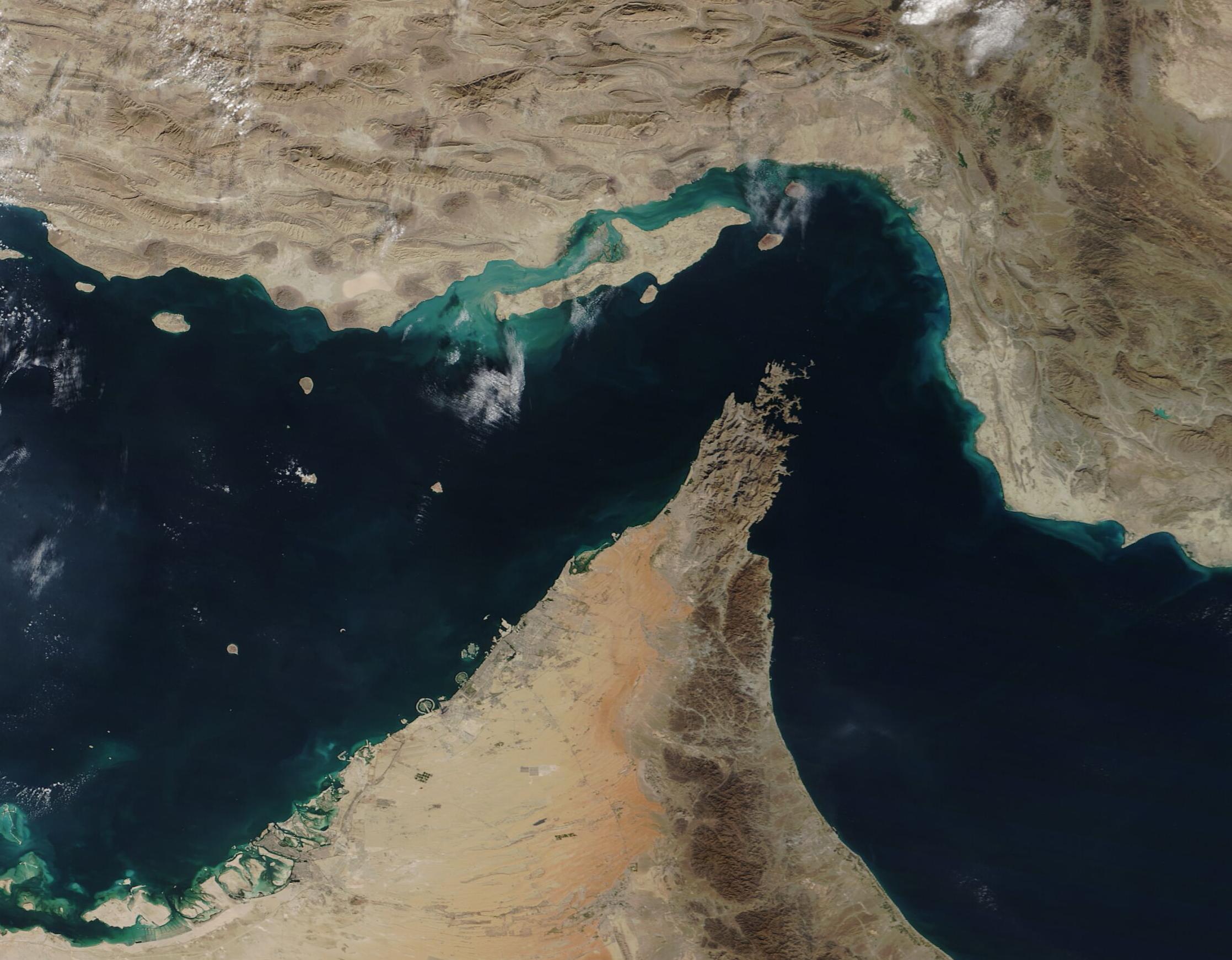
The Strait of Hormuz is a narrow waterway between Oman and Iran that provides the only sea passage between the Gulf and the Indian Ocean. Naval strategists know it as a chokepoint. More than 20 per cent of global oil and gas supplies pass through the strait daily. By declaring the Strait of Hormuz closed and threatening to attack ships trying to transit with missiles, drones and speed boats, Iran is essentially starving global energy markets.
This closure of the strait has had an immediate impact on global energy and food security, with major implications for the world economy. Prices for oil and gas, for fertilisers, and for maritime transport in general have spiked. The longer the strait remains closed, the greater the risk of global ripple effects, supply chain breakdowns, inflation, and humanitarian crises. Scenarios for reopening the strait, even under conditions of continued hostilities, are urgently needed.
Current Mitigation Measures
Major economies that rely heavily on the Middle East for energy, such as Japan, South Korea, India, and China, will be hit the hardest. Even as the International Energy Agency announced on 11 March the release of a record 400 million barrels of oil from strategic stockpiles to combat a spike in global crude prices, this is only a temporary relief. The Strategic Petroleum Reserve (SPR) was not designed to replace daily supply, but it can help buy some time.
Can global energy flows avoid the strait? There are several pipelines that bypass the Strait of Hormuz. These include the east-west pipeline that transports oil from Saudi Arabia’s eastern fields to the ports on the Red Sea. Similarly, there is a pipeline that connects oil fields in Abu Dhabi to the port of Fujairah on the Gulf of Oman. However, the total capacity of these pipelines accounts for only a fraction of the normal daily volume transiting the strait. Both pipelines are, moreover, in the range of Iranian missiles and drones, and Fujairah has been attacked. For Liquified Natural Gas from the Gulf region, there is no alternative transit route.
Opening the Strait Must Be a Priority
As the war continues, the strait must be reopened to avoid a global economic crisis. But it will be a major challenge to ensure safe passage for commercial vessels. This will require a combination of diplomatic and military measures, as well as ingenuity. For the international shipping industry, the determining risk categories are insurance premiums, reputation, reliability, and seafarers’ well-being. Commercial shipping is only to return to the strait once these risks are lower and assurances are in place. What are the scenarios?
India has received assurance from Iran that vessels bound for India will have safe passage. This proved that some diplomatic channels remain open. India has clearly found the sweet spot in managing its relations with Iran, despite still being friends with the US and Israel. It remains to be seen whether any caveat will be placed on this assurance. China, one of Iran’s few friends, is also exercising extreme caution and has reduced vessel movements through the strait. Such direct diplomatic negotiations are likely to be short term, limited to a few flag states, and not at the scale needed to meet global energy demand.
Other scenarios are military. Protecting shipping via naval-escorted convoys is an option. In fact, at one point, US President Donald Trump signalled that the US Navy would provide security escorts for tankers transiting the Strait of Hormuz, but the US Navy has since clarified that there are no such plans. Significant naval capabilities are present in the region. In addition to the US Navy, it includes navies from 47 nations coordinated through the international Combined Maritime Forces, the Indian Navy, and the two European Union naval operations, Atalanta and Aspides.
Mounting a navy-escorted convoy through the Strait of Hormuz, however, is not only very complex but also offers limited protection. While coordination mechanisms between navies in the regions and the shipping industry exist, the scope of threats to shipping is critical. Not only air defence but also capabilities to intercept speed boats and surface drones, and to detect mines would be required.
The limits of escorts and military means are perhaps best demonstrated by the failure of an international naval coalition to protect shipping from attacks by Houthis in the Red Sea. With news that mines are being laid in the strait, it will be more difficult to guarantee safe passage. Any state participating in or supporting military protection, even if justified as collective self-defence, risks being dragged into the war.
Multilateral Solutions Must be Developed
A UN-brokered agreement for safe passage, similar to the Black Sea Grain initiative, may be another option. Under this initiative, joint procedures were agreed upon, and a Joint Coordination Centre monitored implementation. However, in the case of the Black Sea, both Russia and Ukraine had strong incentives to allow the export of grain and fertiliser. Although successful, the agreement collapsed within a year. A similar arrangement in the Strait of Hormuz will require all the oil-exporting countries to come together. And if that is not challenging enough, it will be difficult to find the impetus for Tehran to come to the table willingly, even with the UN acting as mediator.
Other multilateral options could include more flexible maritime security arrangements that bring together regional and international actors and the shipping industry. Such an expert-level Strait of Hormuz Commission or Contact Group could focus on day-to-day operations and provide safety guarantees to individual certified passages. Direct involvement of the shipping industry and its associations, such as the International Chamber of Shipping or the International Association of Independent Tanker Owners (INTERTANKO), and leadership from the European Union, the Gulf Cooperation Council, or India would be key to developing such a flexible solution.
About the Authors
Christian Bueger is Professor of International Relations at the Department of Political Science, University of Copenhagen. Jane Chan is Senior Fellow and Coordinator of the Maritime Security Programme at the S. Rajaratnam School of International Studies (RSIS), Nanyang Technological University (NTU), Singapore.
SYNOPSIS
As the war in the Persian Gulf intensifies, ensuring safe passage through the Strait of Hormuz must remain a priority. How can this be achieved before a lasting, devastating impact on the global economy sets in?
COMMENTARY
Since hostilities started in the Persian Gulf region on 28 February, almost twenty commercial ships have been attacked, and this strategic waterway has become the most dangerous place for international shipping. What started as an attack on Iran by the United States and Israel has rapidly escalated into a global shipping and energy crisis, with no end in sight.
The Strait of Hormuz is a narrow waterway between Oman and Iran that provides the only sea passage between the Gulf and the Indian Ocean. Naval strategists know it as a chokepoint. More than 20 per cent of global oil and gas supplies pass through the strait daily. By declaring the Strait of Hormuz closed and threatening to attack ships trying to transit with missiles, drones and speed boats, Iran is essentially starving global energy markets.
This closure of the strait has had an immediate impact on global energy and food security, with major implications for the world economy. Prices for oil and gas, for fertilisers, and for maritime transport in general have spiked. The longer the strait remains closed, the greater the risk of global ripple effects, supply chain breakdowns, inflation, and humanitarian crises. Scenarios for reopening the strait, even under conditions of continued hostilities, are urgently needed.
Current Mitigation Measures
Major economies that rely heavily on the Middle East for energy, such as Japan, South Korea, India, and China, will be hit the hardest. Even as the International Energy Agency announced on 11 March the release of a record 400 million barrels of oil from strategic stockpiles to combat a spike in global crude prices, this is only a temporary relief. The Strategic Petroleum Reserve (SPR) was not designed to replace daily supply, but it can help buy some time.
Can global energy flows avoid the strait? There are several pipelines that bypass the Strait of Hormuz. These include the east-west pipeline that transports oil from Saudi Arabia’s eastern fields to the ports on the Red Sea. Similarly, there is a pipeline that connects oil fields in Abu Dhabi to the port of Fujairah on the Gulf of Oman. However, the total capacity of these pipelines accounts for only a fraction of the normal daily volume transiting the strait. Both pipelines are, moreover, in the range of Iranian missiles and drones, and Fujairah has been attacked. For Liquified Natural Gas from the Gulf region, there is no alternative transit route.
Opening the Strait Must Be a Priority
As the war continues, the strait must be reopened to avoid a global economic crisis. But it will be a major challenge to ensure safe passage for commercial vessels. This will require a combination of diplomatic and military measures, as well as ingenuity. For the international shipping industry, the determining risk categories are insurance premiums, reputation, reliability, and seafarers’ well-being. Commercial shipping is only to return to the strait once these risks are lower and assurances are in place. What are the scenarios?
India has received assurance from Iran that vessels bound for India will have safe passage. This proved that some diplomatic channels remain open. India has clearly found the sweet spot in managing its relations with Iran, despite still being friends with the US and Israel. It remains to be seen whether any caveat will be placed on this assurance. China, one of Iran’s few friends, is also exercising extreme caution and has reduced vessel movements through the strait. Such direct diplomatic negotiations are likely to be short term, limited to a few flag states, and not at the scale needed to meet global energy demand.
Other scenarios are military. Protecting shipping via naval-escorted convoys is an option. In fact, at one point, US President Donald Trump signalled that the US Navy would provide security escorts for tankers transiting the Strait of Hormuz, but the US Navy has since clarified that there are no such plans. Significant naval capabilities are present in the region. In addition to the US Navy, it includes navies from 47 nations coordinated through the international Combined Maritime Forces, the Indian Navy, and the two European Union naval operations, Atalanta and Aspides.
Mounting a navy-escorted convoy through the Strait of Hormuz, however, is not only very complex but also offers limited protection. While coordination mechanisms between navies in the regions and the shipping industry exist, the scope of threats to shipping is critical. Not only air defence but also capabilities to intercept speed boats and surface drones, and to detect mines would be required.
The limits of escorts and military means are perhaps best demonstrated by the failure of an international naval coalition to protect shipping from attacks by Houthis in the Red Sea. With news that mines are being laid in the strait, it will be more difficult to guarantee safe passage. Any state participating in or supporting military protection, even if justified as collective self-defence, risks being dragged into the war.
Multilateral Solutions Must be Developed
A UN-brokered agreement for safe passage, similar to the Black Sea Grain initiative, may be another option. Under this initiative, joint procedures were agreed upon, and a Joint Coordination Centre monitored implementation. However, in the case of the Black Sea, both Russia and Ukraine had strong incentives to allow the export of grain and fertiliser. Although successful, the agreement collapsed within a year. A similar arrangement in the Strait of Hormuz will require all the oil-exporting countries to come together. And if that is not challenging enough, it will be difficult to find the impetus for Tehran to come to the table willingly, even with the UN acting as mediator.
Other multilateral options could include more flexible maritime security arrangements that bring together regional and international actors and the shipping industry. Such an expert-level Strait of Hormuz Commission or Contact Group could focus on day-to-day operations and provide safety guarantees to individual certified passages. Direct involvement of the shipping industry and its associations, such as the International Chamber of Shipping or the International Association of Independent Tanker Owners (INTERTANKO), and leadership from the European Union, the Gulf Cooperation Council, or India would be key to developing such a flexible solution.
About the Authors
Christian Bueger is Professor of International Relations at the Department of Political Science, University of Copenhagen. Jane Chan is Senior Fellow and Coordinator of the Maritime Security Programme at the S. Rajaratnam School of International Studies (RSIS), Nanyang Technological University (NTU), Singapore.